


05.10.2026
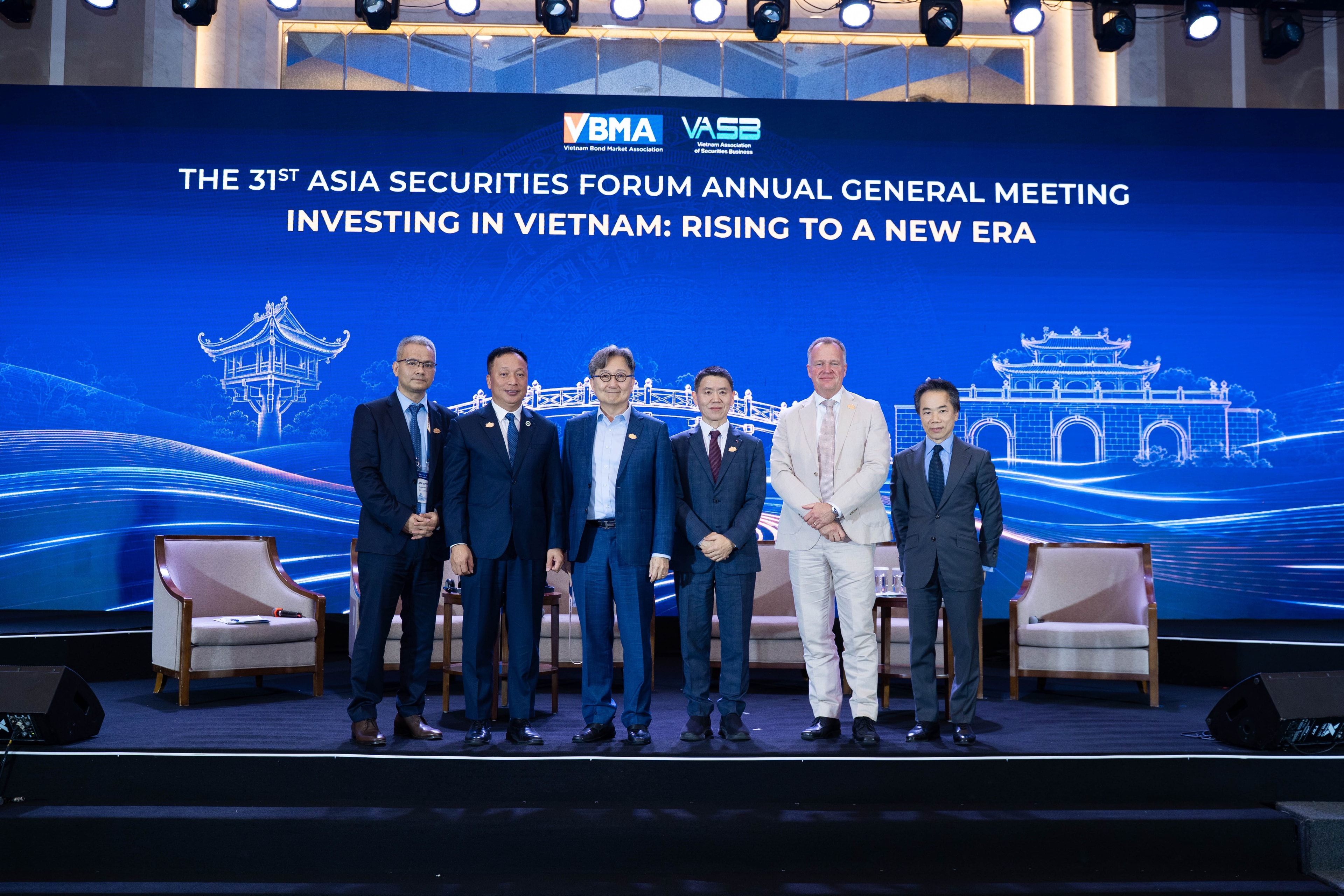
On 2 October 2026, Mr. Johan Nyvene, Chairman of HSC, participated in the thematic forum “Investing in Vietnam: Rising to a New Era”, held as part of the 31st Asian Securities Forum Annual General Meeting (ASF AGM 2026) in Hanoi.
Speaking at the panel “Emerging Markets: From Market Upgrade to a Pillar of Capital Formation for the Economy”, Mr. Johan discussed the conditions required for the capital market to become a more effective channel of long-term funding for businesses.
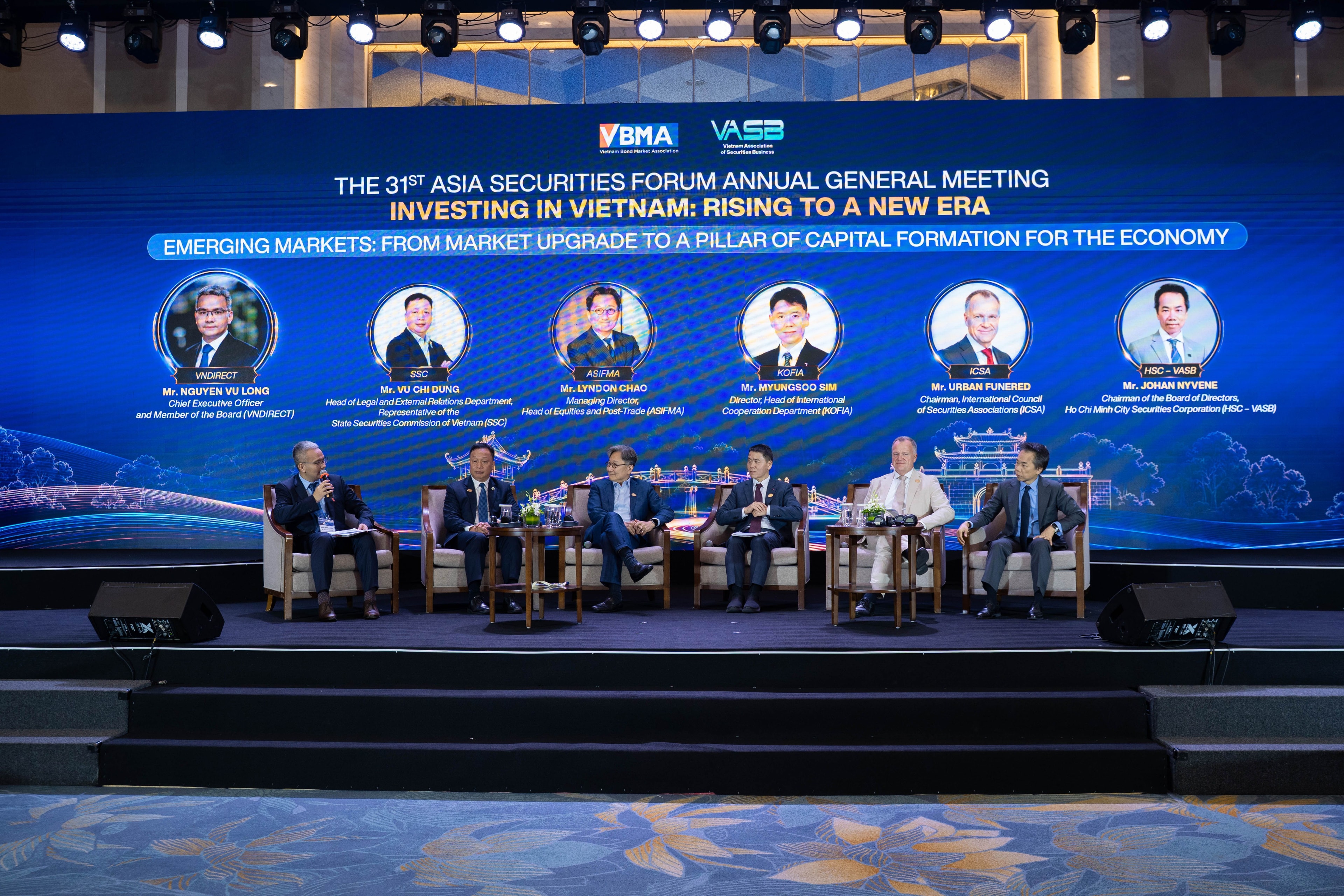
Corporate quality is fundamental to accessing capital
According to Mr. Johan, a company’s decision to raise capital through the market depends on several factors, including the cost of capital, tenor, valuation and execution certainty. These factors need to be sufficiently attractive for companies to accept the accompanying requirements for transparency, disclosure and the sharing of control.
Bank lending remains a familiar source of financing for many businesses. Raising capital through equity or bond issuance, by contrast, requires companies to prepare comprehensive documentation, engage and build confidence with investors, and meet ongoing post-issuance obligations. Profitability alone, therefore, does not necessarily mean that a company is ready to access the capital markets.
Reliable consolidated financial statements, transparent ownership structures, robust internal controls and a credible plan for the use of proceeds provide the foundation for investors to assess risk and determine valuation.
The barriers also vary across different types of companies. For founder-controlled businesses, concerns over dilution and sharing control may influence the decision to issue securities. Established companies tend to focus more on valuation and execution certainty. Smaller or first-time issuers must weigh preparation costs against their internal capabilities, while companies seeking long-term funding need to identify investors whose investment horizons are aligned with their financing needs.
Domestic institutional investors can strengthen long-term capital formation
On the demand side, Mr. Johan highlighted the importance of domestic institutional investors in building the market’s capacity to absorb new issuance. With their capital base and professional investment capabilities, these institutions can provide long-term funding while contributing to more robust price discovery and market-based valuation benchmarks.
He cited voluntary pension funds as a potential source of long-term savings and suggested considering income-based tax incentives to encourage greater participation. He also proposed expanding the range of exchange-traded funds (ETFs) to provide individuals with broader investment options. These are among the areas that could be considered as Vietnam continues to develop its policy framework and capital-market products.
The successful execution of an issuance ultimately depends on the alignment between investors’ return expectations and risk appetite, and the issuer’s valuation, tenor and commitments. Developing a deeper long-term investor base therefore needs to go hand in hand with improving corporate quality and strengthening investor protection.
Reforms should address barriers to capital raising
To encourage more domestic listings and issuance, Mr. Johan proposed greater support for companies preparing to access the market for the first time, greater standardisation of documentation and processes, and more streamlined access to follow-on fundraising for companies with strong disclosure track records.
Alongside reducing the cost of market entry, he emphasised the importance of enforcing disclosure obligations, protecting minority shareholder rights, monitoring compliance with contractual covenants, and strengthening mechanisms for collateral enforcement. These improvements can help investors assess risks more effectively while increasing issuers’ ability to successfully complete capital-raising transactions.
Against this backdrop, the effectiveness of reform should be assessed across the entire capital-raising process: whether companies are able to meet issuance requirements, successfully raise capital at an appropriate cost, and fulfil their post-issuance obligations.
As Vietnam progresses on its market-upgrade journey, greater access to international capital will create new opportunities for domestic businesses. Capturing these opportunities will require parallel progress in corporate governance, capital-raising processes and the development of a strong domestic institutional investor base-ultimately enabling the capital market to play a greater role in providing long-term funding for the economy.
Ho Chi Minh City, November 11, 2026 – Ho Chi Minh City Securities Corporation (HSC) has once again been recognized in the Top 50 Best-performing Companies in Vietnam 2026 ranking by Nhip Cau Dau Tu Magazine. This is the 10th consecutive year HSC has appeared in the ranking. The Top 50 Best Performing Companies in Vietnam ranking is published annually by Nhip Cau Dau Tu Magazine to recognize listed companies with outstanding business results. Companies are assessed on their results over three consecutive years, based on three growth indicators: revenue, return on equity (ROE) and earnings per share. Appearing in the Top 50 for 10 consecutive years reflects HSC’s governance capability, stability and ability to sustain business performance through multiple market cycles.
On 29 October 2026, Ms. Han Vo Thi Ngoc, Senior Institutional Sales Director at Ho Chi Minh City Securities Corporation (HSC), took part as a speaker at the AIMA APAC Annual Forum 2026 in Hong Kong. The annual forum is organized by the Alternative Investment Management Association (AIMA). It brings together policymakers, regulators, alternative investment managers and financial industry professionals from across the Asia-Pacific region. The event gives members of the asset management and alternative investment industry an opportunity to connect and exchange views on the trends, challenges and opportunities shaping the region’s financial markets. At the event, Ms. Han joined the panel discussion “SpeedRun: Three Markets, Three Stories – The Essential Investor Update,” alongside experts from leading international financial institutions, including UBS, the Dubai International Financial Centre (DIFC) Authority and White & Case. HSC’s participation in the forum helps strengthen its engagement with the international institutional investor community, broaden professional exchange and reinforce HSC’s presence within the regional capital markets network.